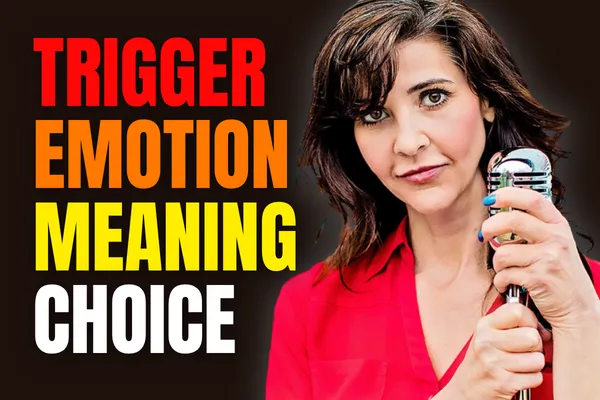
S6_E08. Why Writing Great Characters Requires Emotional Work
Writing compelling characters requires more than clever plots or witty dialogue—it demands emotional work. In this episode of The Storyteller’s Mission, Zena Dell Lowe explores how writers can deepen character arcs by understanding and owning their own emotional responses.
You’ll learn why conflict is the engine of character growth, how to translate emotional triggers into believable reactions, and the difference between context and justification in storytelling. This conversation is packed with actionable insights for novelists, screenwriters, and nonfiction writers who want to create deeply resonant, authentic characters.
Discover how mastering your own emotional awareness can transform your writing, create more realistic character interactions, and strengthen every story you tell. Whether you struggle with flat characters, weak emotional arcs, or conflict that falls flat, this episode gives you the tools to write characters readers will remember.
Seven Deadly Plot Points FREE TRAINING VIDEO!
Free Video Tutorial for Screenwriting
Sign up for The Storyteller's Digest, my exclusive bi-monthly newsletter for writers and storytellers. Each edition delivers an insightful article or practical writing tip straight from me, designed to help you master your craft and tell compelling stories.
The Storyteller's Mission Podcast is now on YouTube. You can watch your favorite podcast as well as listen. Subscribe to our channel and never miss a new episode or announcement.
Watch this episode on YouTube:
Contact us for anything else!
Chapters:
00:00 – What Does It Mean to Own Your Feelings?
01:00 – The Misconception Around Emotional Ownership
02:00 – Why This Matters for Writers
03:00 – The Language of Emotional Ownership
05:00 – Context vs. Justification
07:00 – Why Explanations Get Misunderstood
09:00 – Writing More Human, Complex Characters
10:30 – “What’s Hysterical Is Historical”
12:00 – Owning Your Feelings Without Excusing Behavior
13:00 – How to Receive an Apology
15:00 – Why Everyone Ghosts Instead of Resolving Conflict
17:00 – Conflict + Resolution = Intimacy
18:40 – What Conflict Reveals About Your Characters
20:00 – Final Takeaway: Growth Happens Through Conflict
Transcript:
[00:00:00] Writers, have you ever wondered what it actually means to take ownership of your feelings? And I don't mean just your characters, I mean you in real life. Do you [00:00:10] know what that looks like? It sure feels like they made you feel a certain way, doesn't it? And meanwhile, what do we see happening all around us?
[00:00:18] People don't [00:00:20] talk through conflict anymore. They cut you off. They sever the relationship. They unfriend you, they block you, ghost you, and. [00:00:30] They think it's healthy because they've decided you're toxic because here's the truth, nothing reveals character [00:00:40] faster than how someone handles conflict. Hello and welcome to the Storytellers Mission with Zena Dello.
[00:00:48] Today we're going to [00:00:50] explore what it really means to own your feelings and why that matters for storytellers. Ownership is not what people think. Most people [00:01:00] misunderstand what it means to own your feelings. They think it means pretending others didn't hurt you, or becoming emotionally detached, taking the blame for [00:01:10] every negative interaction.
[00:01:11] Or simply swallowing the bad behavior of others, but none of that is true. Owning your feelings doesn't mean pretending that the other person didn't affect [00:01:20] you. It simply means recognizing that your emotional response to the situation ultimately belongs to you, not to them. So [00:01:30] someone can absolutely trigger a feeling, but you are ultimately responsible for what you do with it.
[00:01:36] That is the subtle distinction. Now, let me ask you something. [00:01:40] Think about a recent conflict in your life when the emotion showed up, anger, embarrassment, hurt, whatever it was, did you assume that the other person caused it, [00:01:50] or did you pause long enough to ask yourself what was happening inside of you, what this was triggering?
[00:01:56] Deep down that one question can change [00:02:00] everything. I wanna give you a metaphor to think about this because the way we talk about our emotions reveals how much ownership we're actually taking. [00:02:10] Now, here's why this matters for storytellers. Conflict in a story is a broken window. Something happens that triggers the emotional alarm [00:02:20] inside the character, but what defines that character is not the trigger itself.
[00:02:24] Now if you're a writer, this is worth paying attention to because most stories don't [00:02:30] fail in the plot. The plot fails because of how the character. Responds to conflict. How do they respond? Do they [00:02:40] explode? Do they withdraw? Do they blame everyone else, or do they wrestle with what's happening inside of them and choose a response?[00:02:50]
[00:02:50] That choice is where character is revealed, and that's where real character arc begins. So let me give you a small example of how [00:03:00] this works. When I was growing up, my stepfather had what he called Ralph Wright's Rules for Fighting Fair. It included things like no [00:03:10] name calling, no threatening abandonment, and fighting about what you're actually fighting about.
[00:03:16] But there was one rule that always stood out to me, and that was, you were never [00:03:20] allowed to say, he made me mad. If my brother Robbie knocked over my Barbie house, I had to say, when Robbie knocked over my Barbie house, I got mad. [00:03:30] The difference may sound small, but the moment you say, he made me feel you hand over emotional control, you make the other person responsible for what's [00:03:40] happening inside of you.
[00:03:41] And that's where language becomes important because the way we describe conflict reveals how much ownership we're actually taking. The [00:03:50] language of ownership. Ownership language tends to follow a simple pattern. First, you name the trigger what actually [00:04:00] happened. No loaded language, no accusation, just the event.
[00:04:04] Then you name the emotional reaction, how you felt. I felt embarrassed. I felt [00:04:10] hurt, I felt angry, whatever. Just the feeling. Third, you name the interpretation. This is the key part, right? Because [00:04:20] emotions always exist inside a story. So how did you interpret what happened? I interpreted what you did as [00:04:30] this.
[00:04:30] I interpreted that as disrespect. I felt like you were being mean to me for no reason. And then finally, you named the impact that confused me, [00:04:40] or that made me feel unsafe, or that made me want to withdraw, or whatever the case may be. So instead of accusing someone, now you are just [00:04:50] describing the internal chain reaction that happened.
[00:04:53] You're saying, here's what happened to me when this occurred, and that is the difference. You're saying, here's [00:05:00] what happened. Here's what it stirred up in me. Here's what that experience meant to me, and here's how it felt. That's honesty without accusation. [00:05:10] Now, again, let's bridge this to storytelling because it becomes incredibly useful for writers because if you listen carefully, you'll notice something.
[00:05:19] There is a [00:05:20] four step pattern here, and it's exactly how characters experience conflict internally in story. First, there's the trigger, [00:05:30] then there's the emotion, then there's the interpretation, then there's the impact. It. And if you understand that process in real life, you can write far more [00:05:40] believable emotional reactions on the page.
[00:05:42] It'll add credibility to your story. Context is not justification, [00:05:50] by the way. This is where things get messy. Sometimes people accuse you of trying to justify yourself when what you're really trying to do is just offer context [00:06:00] for what happened. But context and justification are not the same thing.
[00:06:04] Justification says, my actions were okay because of X, Y, and [00:06:10] Z. Context says my actions were not okay. And here's what was happening inside of me when this happened. Now a lot of people have [00:06:20] experienced manipulative justifications, so now they assume that any person who offers an explanation is manipulating them.
[00:06:28] But an [00:06:30] explanation with ownership is not manipulation, it's clarity. For example, someone might say, yes, you're right. I did lash out. I think part [00:06:40] of why I did that was because you were late to our lunch and I started feeling like my time didn't matter to you, but it was wrong for me to lash out at you like that.
[00:06:48] And I'm sorry I shouldn't have done [00:06:50] that. So that's not an excuse, that's an explanation that gives context, but it still takes ownership. [00:07:00] Unfortunately, sometimes people don't actually want context. They just want submission. They don't wanna understand what happened inside of you or [00:07:10] why you might've felt that way.
[00:07:11] They just want you to collapse into shame. There's this strange cultural expectation that the only acceptable apology sounds [00:07:20] something like, you're right, I'm a piece of garbage. I'm a terrible person. But true humility is not. Self-hatred and people who [00:07:30] genuinely care about us shouldn't want us to hate ourselves.
[00:07:33] When we admit wrongdoing and ask for forgiveness, we're exhibiting repentant behavior. [00:07:40] Repentance doesn't require character assassination. It requires a change of heart. Confession is meant to bring restoration, not humiliation. [00:07:50] Humiliation doesn't actually repair relationships. It just widens the divide.
[00:07:56] Because now it's a one up, one down situation. You're a piece of crap and [00:08:00] the other person is superior to you, and that is not true. Reconciliation. This happened to me once. In a relationship with my sister, where she [00:08:10] called me on something I had done and it was wrong, and I immediately owned it. I said, you're right.
[00:08:15] I did this thing. I'm so sorry. And then I tried to offer why I thought [00:08:20] I had done that thing, and she turned it around and said, oh, so now you're blaming me for why you did this, which is not what I was trying to do. So that's where we have to understand [00:08:30] that sometimes offering context is not blame shifting.
[00:08:34] It's simply trying to help people to understand where you came from. And if we can understand that, we can [00:08:40] receive people's context better and it allows for a quicker bridge to relationship. Now let me bring this back to [00:08:50] storytelling. Because this matters for storytelling in a really interesting way because characters who justify their actions feel manipulative.[00:09:00]
[00:09:00] But characters who provide context while still owning their behavior feel human. They feel complex. They feel real. And that [00:09:10] distinction is one of the things that separates shallow character writing from emotionally honest storytelling. But there's a deeper layer here. [00:09:20] Ownership also means exploring something that most people never examine, and that is a layer that heroic [00:09:30] characters must explore if we're going to believe their arc.
[00:09:35] And that is the question of why. Why did that comment hit so hard? [00:09:40] Why am I reacting so intensely? In treatment, we used to say, whatever makes you hysterical is [00:09:50] historical. Have you ever noticed that what that means is that the size of your reaction doesn't actually match the size of the moment.
[00:09:59] [00:10:00] Sometimes big reactions connect to old wounds. Something in the present is touching on something that's still unresolved in the past, and so [00:10:10] you're having a reaction that doesn't match the current situation. Now, here's why this matters for storytelling. The entire point of your story is the [00:10:20] internal change that your character undergoes because of the adventure they happen to be on.
[00:10:26] As the story unfolds, the hero should be [00:10:30] coming less and less focused on controlling what everyone else does, and more and more interested in understanding what's happening inside of themselves [00:10:40] and realigning their reaction. To what's right, and here's the important part, that inward reflection doesn't make them selfish or self [00:10:50] absorb.
[00:10:50] It's exactly what prepares them for the responsibility they're about to carry out. Because once the character understands their own [00:11:00] wounds and fears and motivations, they gain the emotional maturity necessary to face the true conflict of the story. That [00:11:10] is what ultimately equips them. To confront the antagonist ownership in real life and in story means [00:11:20] asking a simple but uncomfortable question, what part of me did that hit that self-awareness?
[00:11:26] And that's where real growth begins. [00:11:30] But let me be very clear about something. Owning your feelings does not mean excusing bad behavior. Sometimes people genuinely behave badly. [00:11:40] Sometimes they actually do want to hurt us. So ownership doesn't mean pretending that abuse is just misunderstanding. You can say, I own [00:11:50] my reaction to this, and also say that behavior wasn't okay.
[00:11:54] Both things can be true at the same time. The real emotional [00:12:00] nuance here is that we own our side of it. That is where maturity lives in story, that tension, [00:12:10] not just in story, but in real life. Now, this brings up another interesting thing, which is how to receive an apology. It's something that rarely gets talked about in story or [00:12:20] in life, and the question of how a character handles an apology is important.
[00:12:25] Not how they give one, although that matters too, but how they actually receive [00:12:30] one because it reveals so much about who they are. So recently I was in a conflict with a good friend of mine and he lashed out at me in anger, [00:12:40] but later he called back and he apologized. That took courage. He owned it. He was sincere.
[00:12:46] But guess what? I was still hurt by it. So [00:12:50] instead of being able to receive the apology in that moment, I kept pressing the wound. I kept saying things like, let me explain how much that hurt me and how that [00:13:00] translates is, and now let me tell you how wrong you were, which is exactly what my sister was doing to me before when I tried to offer context.
[00:13:09] But afterwards [00:13:10] I realized something important. An apology is a moment of vulnerability. When someone steps forward and says, I was wrong, they are [00:13:20] exposed, and if we respond to them by dissecting just how terrible they actually were, that isn't going to lead to repair [00:13:30] because it's punishment. It's kicking someone while they're down.
[00:13:35] The pain they caused is real. That doesn't get [00:13:40] diminished. It's just that grace means meeting people where they are, especially when they are being vulnerable. So if a genuine apology [00:13:50] happens, don't meet it with shame, because if you do, people will eventually stop apologizing to you. Not because they're [00:14:00] unrepentant, but because it feels unsafe.
[00:14:02] So when someone offers a real apology, whether in life or in story one that is clear, [00:14:10] specific and accountable, let the moment stand. That doesn't necessarily mean that the conversation is over forever. There may still be [00:14:20] things that need to be processed down the road, but those conversations can come later.
[00:14:25] For now, respond with grace. Let the walls come down. Let there be [00:14:30] peace. Because that moment deserves the repair that restores intimacy in story. That restored relationship [00:14:40] often becomes the very thing that allows the character to move forward into the climax, because now they don't have anything separating 'em from the people, the [00:14:50] allies that they need in order to go into that climax.
[00:14:54] But this leads me to the next section, which is why everyone ghosts these [00:15:00] days. We live in a culture that increasingly confuses discomfort with danger. So if someone hurts us or [00:15:10] simply disagrees with us, we label them toxic and we remove them from our lives. In the Devil Wears Prada, there's a scene where Andy quits and she tosses her phone [00:15:20] into the fountain.
[00:15:20] It's the perfect cultural symbol of this kind of mindset. It's triumphant and symbolic. It's severing the relationship permanently, and in [00:15:30] that story, leaving is healthy because Miranda is abusive, but culturally, that moment has become a template. Drop the phone, walk away. Don't [00:15:40] explain sever. And the danger is when we apply that template to ordinary human conflict, because most of the time what we [00:15:50] are reacting to isn't actually abuse.
[00:15:53] It's human frailty. People are messy, people are [00:16:00] clunky. They deliver things in an imperfect, clunky way. We get wounded in communication because people struggle to communicate clearly. That doesn't [00:16:10] make them evil. It makes them fragile. But most people today have very little tolerance for relational friction.
[00:16:19] We have [00:16:20] become so fragile ourselves. We are emotionally intolerant. We're conflict avoidant. We are addicted to [00:16:30] validation. We're allergic to discomfort, and social media has only reinforced this pattern. It's trained people to curate [00:16:40] other people the same way that we might curate a playlist. And if someone bothers us, skip, delete.
[00:16:46] Block in relationship. [00:16:50] What a shame, but meaningful connection. Isn't supposed to work that way. Meaningful connection actually requires [00:17:00] conflict. In fact, conflict is one of the essential ingredients of deeper intimacy. A friend of mine used to say, [00:17:10] conflict plus resolution equals intimacy, and it is so true.
[00:17:16] Elizabeth and Darcy. Are a perfect [00:17:20] illustration of this idea in pride and prejudice. Elizabeth doesn't ghost Darcy, she confronts him. She names his pride. She names the wound. [00:17:30] And guess what? Darcy doesn't see that as toxic. He doesn't disappear. He reflects, he considers he changes as a result. And guess [00:17:40] what?
[00:17:40] The relationship deepens. That is what happens when conflict leads to resolution. When two people [00:17:50] stay in the room and wrestle honestly, and don't just walk out and end relationship when two people struggle to understand rather than [00:18:00] win or defeat the other person. That is where intimacy is built.
[00:18:04] Conflict reveals character. It exposes wounds, it [00:18:10] tests values. It forces growth. Without conflict, relationships remain shallow. So real [00:18:20] connection, and everybody really wants real connection. Real connection. True intimacy requires learning how to fight, but to [00:18:30] fight fair. Now, why does this matter? For story?
[00:18:34] Let's bring it back to storytelling, because writers need to pay close attention to this. The [00:18:40] purpose of story. Is not just to reveal character, it's to change that character for better or for worse over the course of the story. And [00:18:50] nothing drives that change more powerfully than conflict. So let me ask you something.
[00:18:57] When your characters encounter [00:19:00] conflict, what do they do? Do they explode, withdraw, manipulate, ghost? Do they over own? [00:19:10] Or do they stay in the tension long enough to grow? Do they seek to understand where the other person is coming from? Because the way a [00:19:20] character handles conflict tells us who they are deep down in their core.
[00:19:25] And character Arc at its core is [00:19:30] this. It's about a character. Learning how to face conflict without destroying themselves or everyone else around them. [00:19:40] Taking it one step further, it means taking the lessons learned through that conflict and applying them to the characters deeper calling. [00:19:50] So if you take nothing else away from this episode today, remember this growth does not happen in the absence of conflict.
[00:19:59] [00:20:00] It happens through it. Conflict is not the enemy of intimacy. Avoidances. In fact, conflict is the [00:20:10] key to intimacy. So if we run from tension, we are going to stay stuck both personally and our characters. But if we're willing to stay in the [00:20:20] room to listen, to seek to understand, to examine what's really happening inside of us, and to wrestle honestly with the people around us.
[00:20:29] [00:20:30] That is where real transformation begins, not just in life, but in story, because the characters we remember most are not [00:20:40] the ones who escape conflict. They're the ones who face it and change because of it. In so doing, they finally become [00:20:50] the person that can step into the heroic character they were always meant to be, and they can finally face the battle that they have to face at the end.[00:21:00]
[00:21:00] So maybe the strongest person in the room isn't the one who storms out. Maybe it's the one who stays. If today's episode has resonated with you, please take a moment to like and [00:21:10] subscribe and comment in the notes below. Share it with a friend. Thank you for listening to the Storyteller's mission with Xena Del Lo.
[00:21:19] May [00:21:20] you go forth inspired to change the world for the better through [00:21:30] story.
